
Nobody is held accountable for lapses, no matter how badly it affects the person or business whose accounts are frozen. Nor is there compensation for losses. Most people get to know their accounts are blocked only when a cheque bounces, points out Debashis Basu.

'Rhetoric and chest-thumping are running high on India's recent growth record.'
'But will the giant waves developing elsewhere allow us to sail smoothly into fair winds?' asks Debashis Basu.

The most important positive of India's stealth bull market is earnings growth across different sectors, explains Debashis Basu.

The Adani story has only one angle -- how the stocks were rigged up to ridiculous heights, the Hindenburg report on gross overvaluation, followed by the vertical free fall of Adani stocks, points out Debashis Basu.

After bumbling for years since 2014, the Modi government seems to believe that massive government expenditure will lead us to prosperity supported by 'seat-of-the-pants' decision-making, observes Debashis Basu.
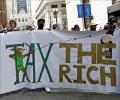
Taxing the rich will fetch nothing; only votes, argues Debashis Basu.

We as customers have to be conscious and careful to sidestep numerous types of frauds made possible under a mindless shift to a digital ecosystem without customer-redress procedures, warns Debashis Basu.

The Adani stock price saga will pass into public memory as one of those matters that simply escaped being nailed down, perhaps because too many vested interests were involved, notes Debashis Basu.

The 'sudden volatility' in Adani stocks is entirely due to a series of events that was extreme and unique, and played out in too short a period. Investors and regulators pretended that it wasn't so. But then, along came Hindenburg, which forced some eyes to open, points out Debashis Basu.

Because they have become too big and pervasive and the time to regulate is long gone, points out Debashis Basu.
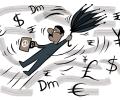
Just because India has outperformed the US markets in a short recent period, it does not mean that this is based on fundamental reasons that are here to stay, points out Debashis Basu.

Mutual funds, as experts and custodians of another set of retail investors' savings, play a speculative game they are neither supposed to nor equipped to do, cautions Debashis Basu.

There are overvaluation and excesses in many pockets of the market. This is most obvious in the IPO market, where loss-making companies have inflicted large losses on investors, observes Debashis Basu.

The most important step is delivering what is needed -- a fairer IPO pricing, notes Debashis Basu.

Damage from new shenanigans can be contained if regulators move quickly when something does not smell right, counsels Debashis Basu.

From small restaurants to mighty software companies, it is businesses, not the government, that create jobs. Yet, in a cruel irony, they have to fight extortive and brutal State power every step of the way, says Debashis Basu.

The rot is is not limited to Chitra Ramkrishna and the yogi, observed Debashis Basu.

If the central banks act harshly now, the markets will crash and then rally. If they are hesitant, the pain will be prolonged, predicts Debashis Basu.

Since 2016, Sebi has made many rules to prevent unauthorised trading by stockbrokers. Yet, one comes across dozens of cases of blatant overtrading in client accounts, every year, leading to massive losses to investors, observes Debashis Basu.
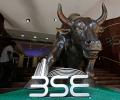
COVID-19 forced people to work from home turned into the fuel for new demat accounts, observes Debashis Basu.

His advice was to always start with small positions because we are bound to make mistakes; and remain humble because the markets can be merciless, remembers Debashis Basu.
Following the money and freezing anything unaccounted is the only way to set an example for others, suggests Debashis Basu.
It is the biggest issue we have ever faced in the securities market, where a sensitive and systemically important institution and first-line regulator was not only exploited by unscrupulous elements but functioned like a private fief, points out Debashis Basu.
Nothing has ever been done to make bank officers accountable, except for the rare actions when there is a public controversy, argues Debashis Basu.

Rogue lending under political influence was rife in the Congress-led regime and is not happening in the Modi regime, certainly not on that scale. But if PSBs cannot lend as indiscriminately as they did last time in the name of 'credit expansion', how well will these banks do, asks Debashis Basu.

We have not suffered such huge price shocks across so many basic commodities, at the same time, in decades. Has the inflationary impact of all this been factored into stock prices as yet, asks Debashis Basu.

Start-ups don't care that mad-money funding comes to a hard stop after an IPO, observes Debashis Basu. As a listed entity, corporate actions have to take the interests of all shareholders, especially minority shareholders, into account. So far, we are not seeing any sign of it, observes Debashis Basu.

The tax department will remain a source of endless nightmares for citizens and 'transparent taxation' will remain an empty slogan and a cruel joke, observes Debashis Basu.
The market players were expecting that if long-term gains are taxed, the STT would go. But this has not happened, says Debashis Basu.

It is impossible for anyone to explain how markets are hitting record highs during an economic recession. It is both mysterious and surreal, notes Debashis Basu.

If Sebi and RBI remain quiet about this brazenly illegal activity, will someone in the finance ministry or the NITI Aayog take a closer look, asks Debashis Basu.

I am not sure if Modi can ever act as a chowkidar, even if he wants to. But he can surely act as a thanedar, by ensuring a fast resolution of corruption cases once they come to light. Exemplary action is easier and will burnish his anti-corruption image, argues Debashis Basu.

Large investors track high-frequency data that is immediately available today. That data has been bullish, points out Debashis Basu.

'The growth drivers are mostly invisible, but the growth is undeniable at least for now,' notes Debashis Basu.

Even when large businesses said they were flying blind in mid-2020, the markets rallied and an incredible business boom followed. This is not to say that the markets will continue to rally and there is nothing to worry about, observes Debashis Basu.

A quaint Indian idea called face value is putting high-performing companies out of the reach of retail investors, observes Debashis Basu.

While most brokers have upgraded their backend systems to trade, their front-end systems have not been upgraded. They are not compliant with Sebi's interop circular of November 2018 and no one seems to be either aware of this, nor has anything been done about it so far, explains Debashis Basu.
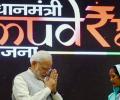
Not only has the Mudra loan mela generated no jobs, it has frittered away trillions of taxpayers' money and it's time to bury the scheme, argues Debashis Basu.
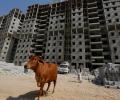
Property buyers fund the project cost and the entire debt and entire equity servicing, and yet, have no locus standi in the IBC process, points out Debashis Basu.

In a most perverse example of tax bullying, someone I know has got by three such notices reopening his assessment minutes before the midnight deadline of June 30, reveals Debashis Basu.
